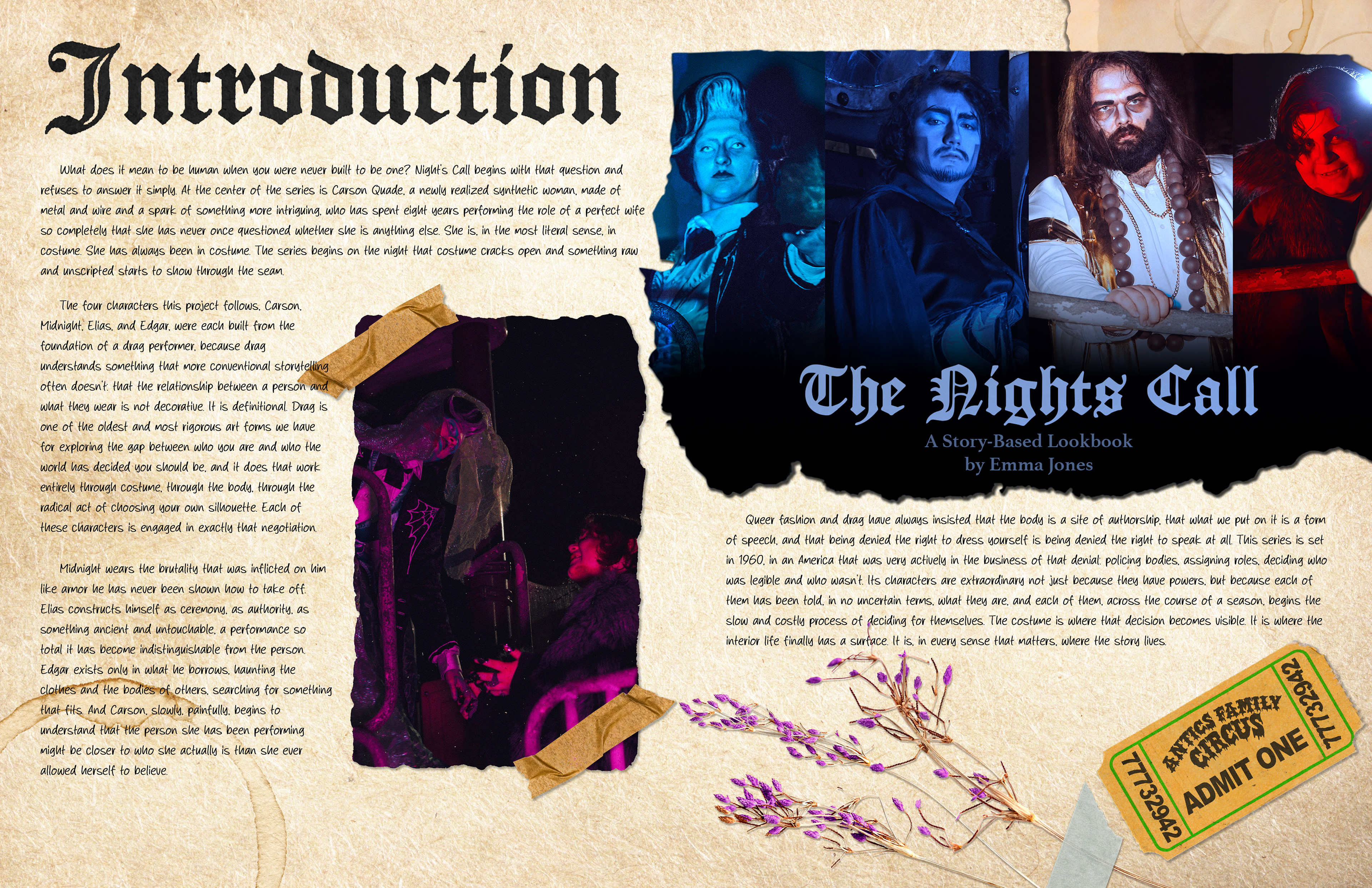
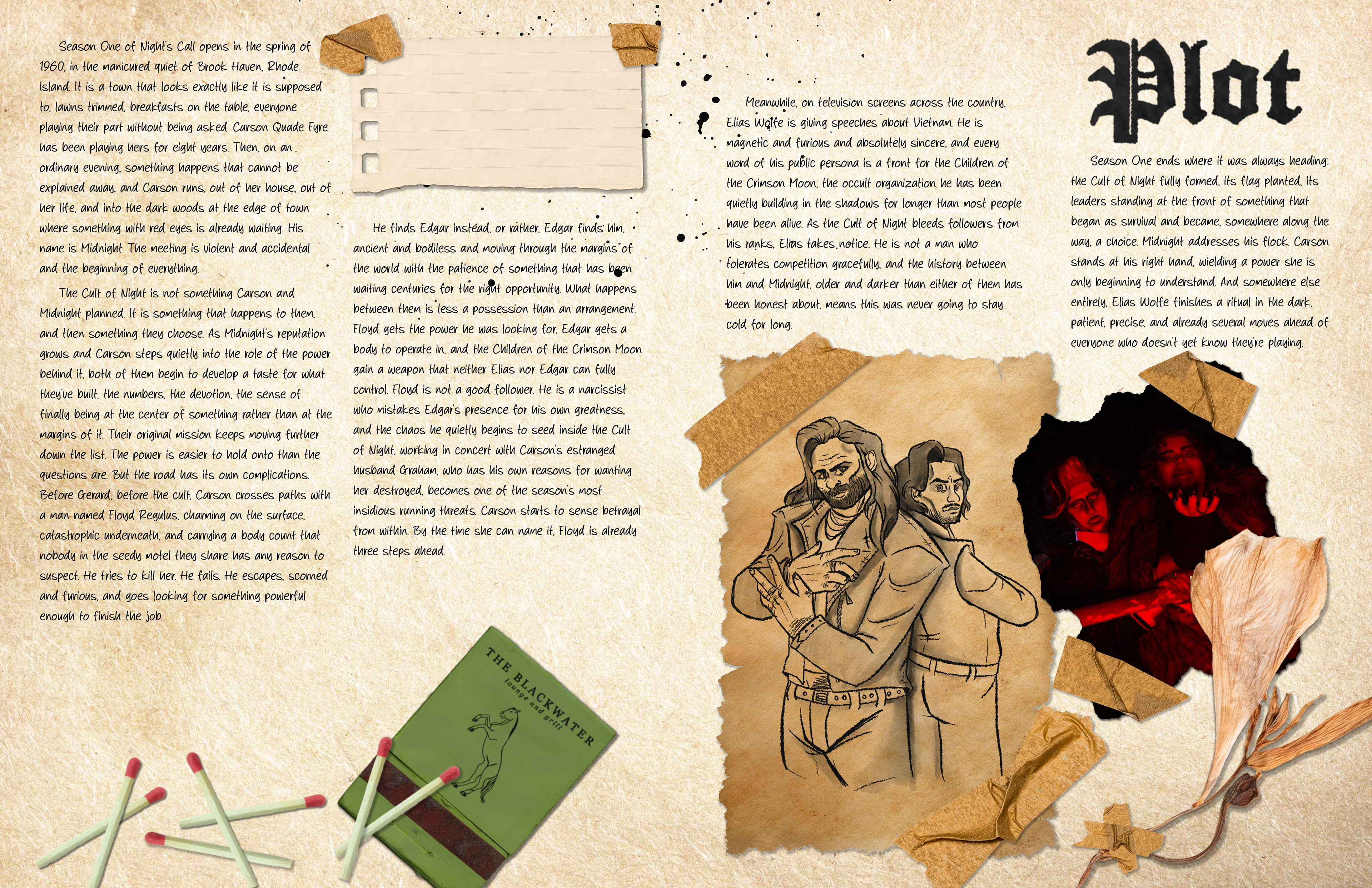
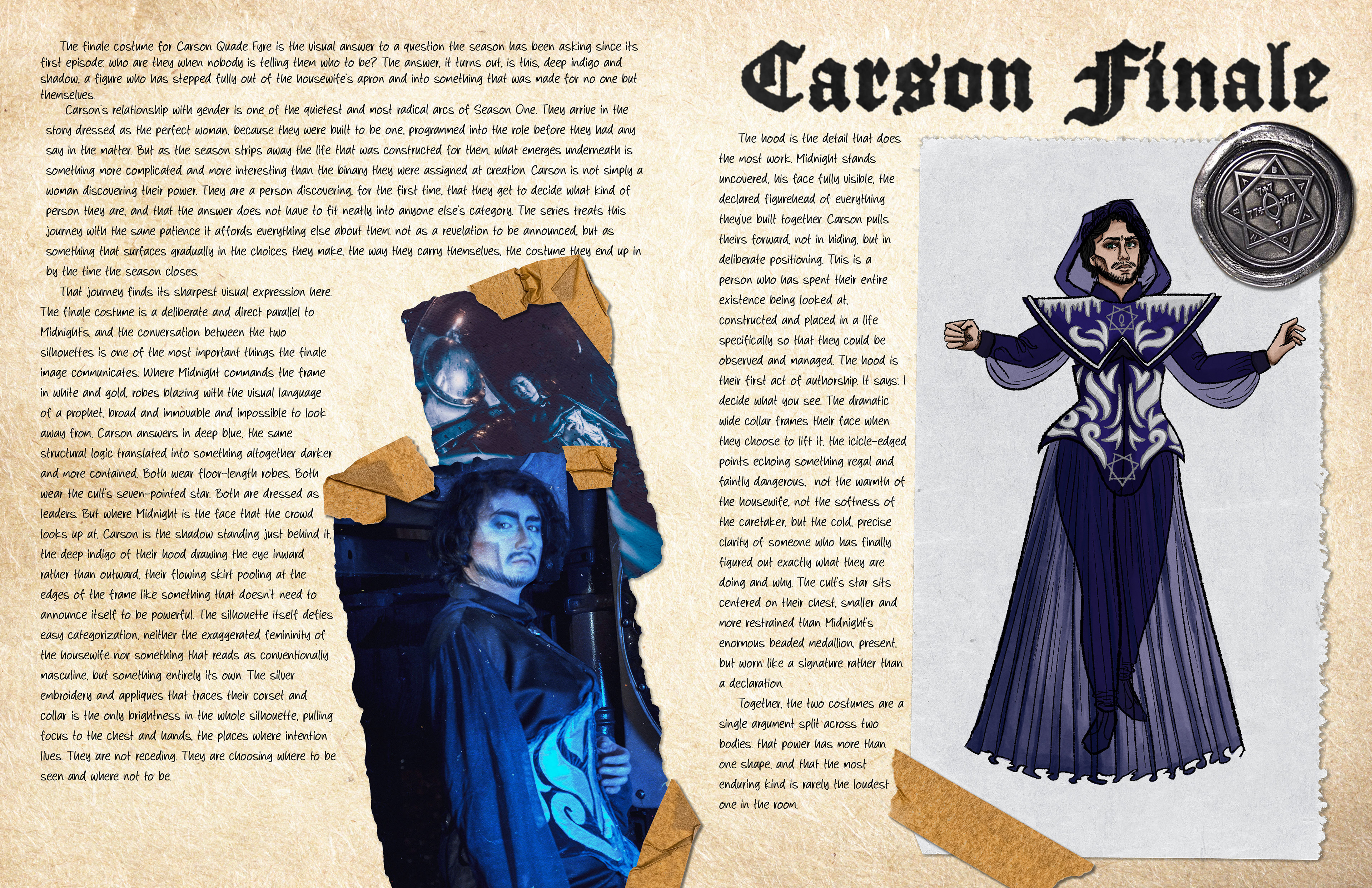
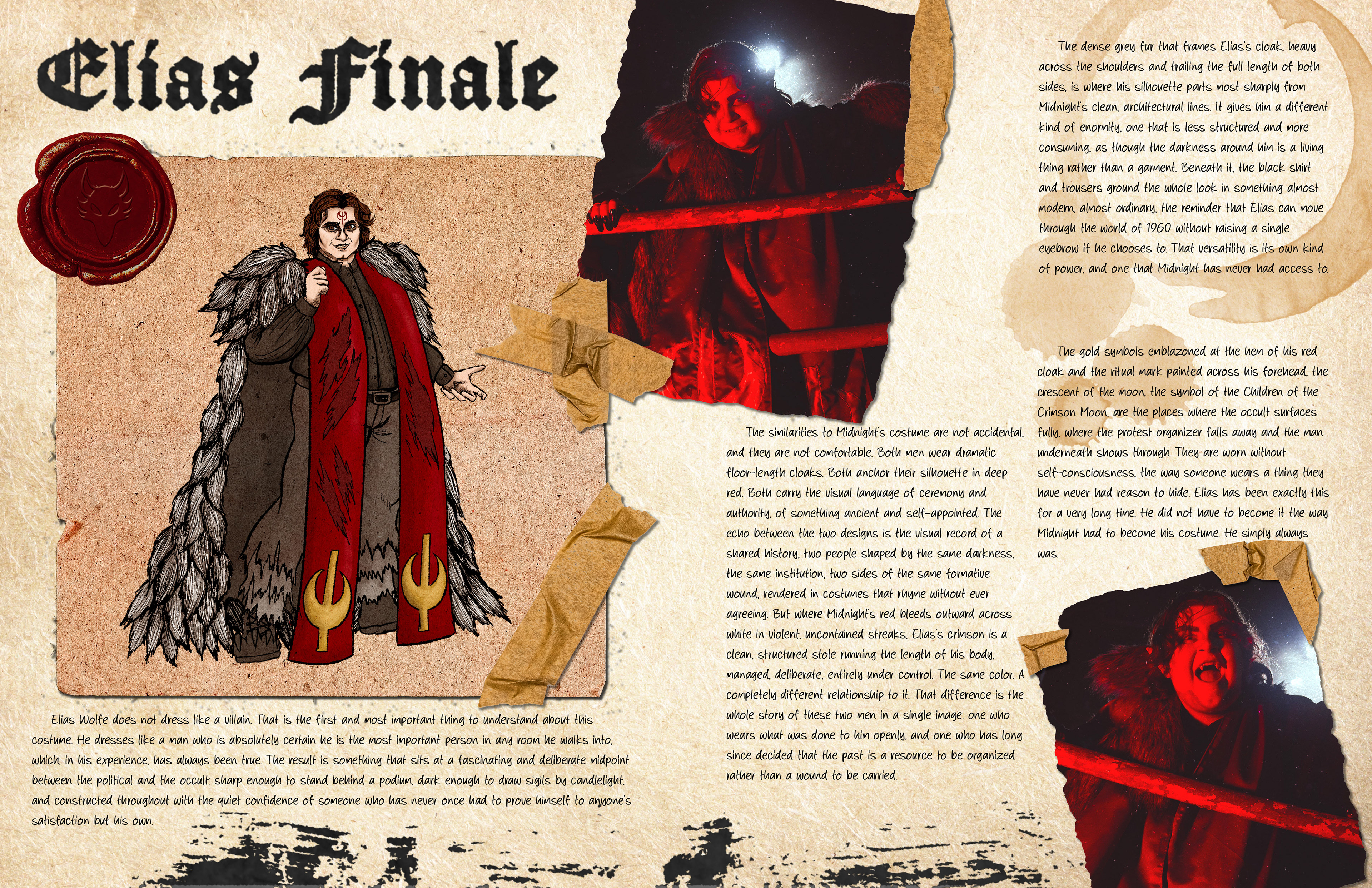
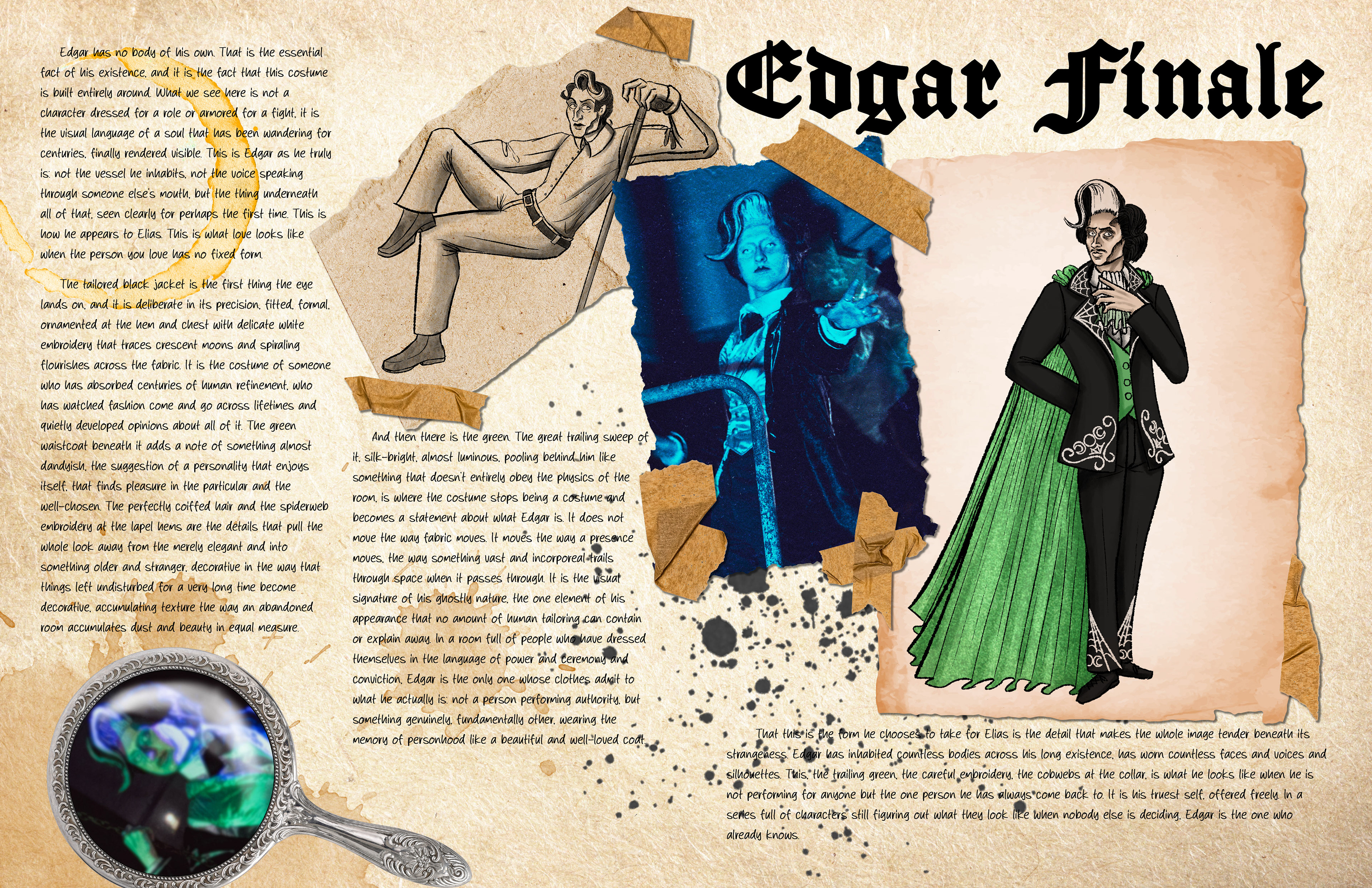
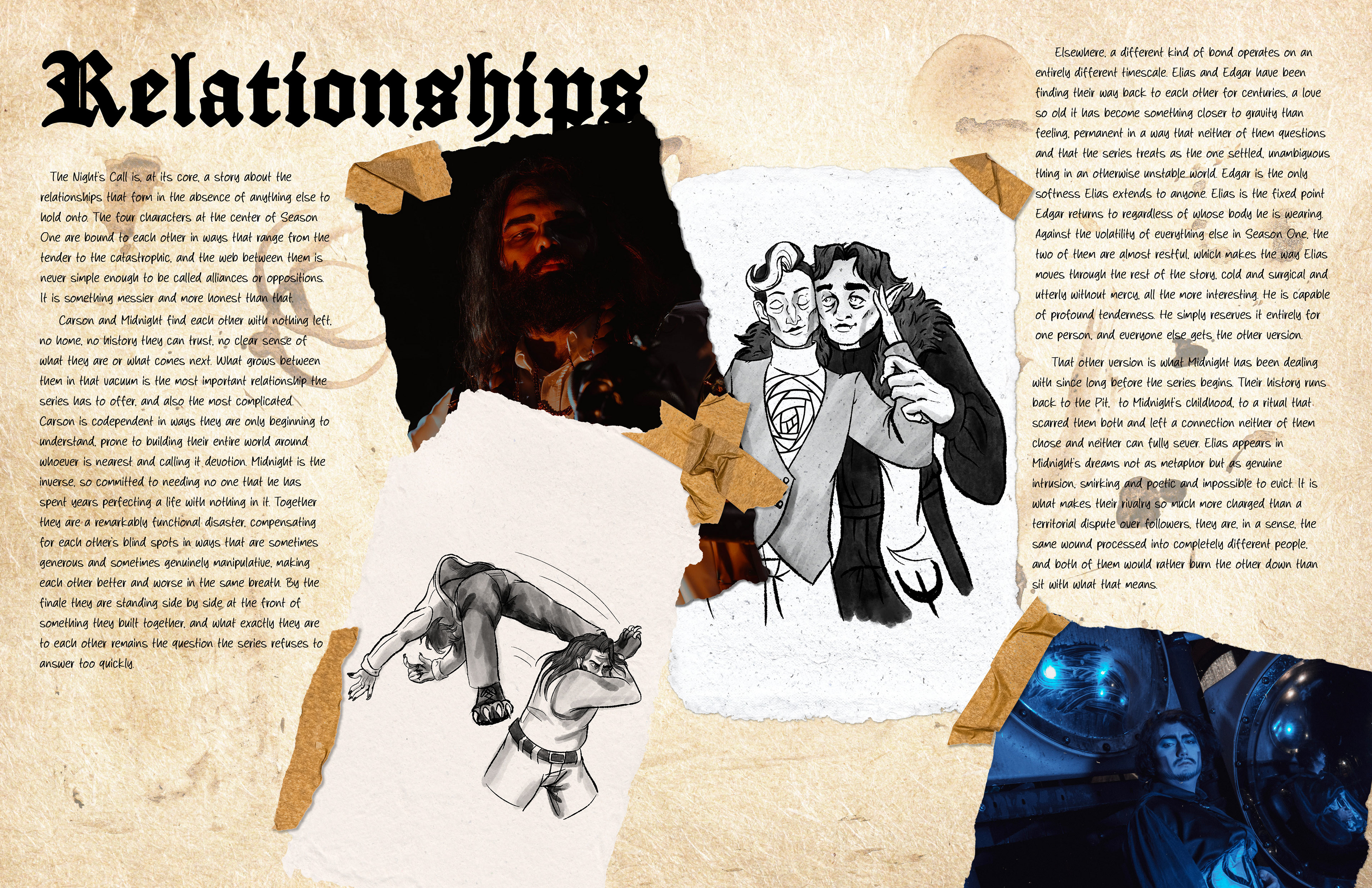
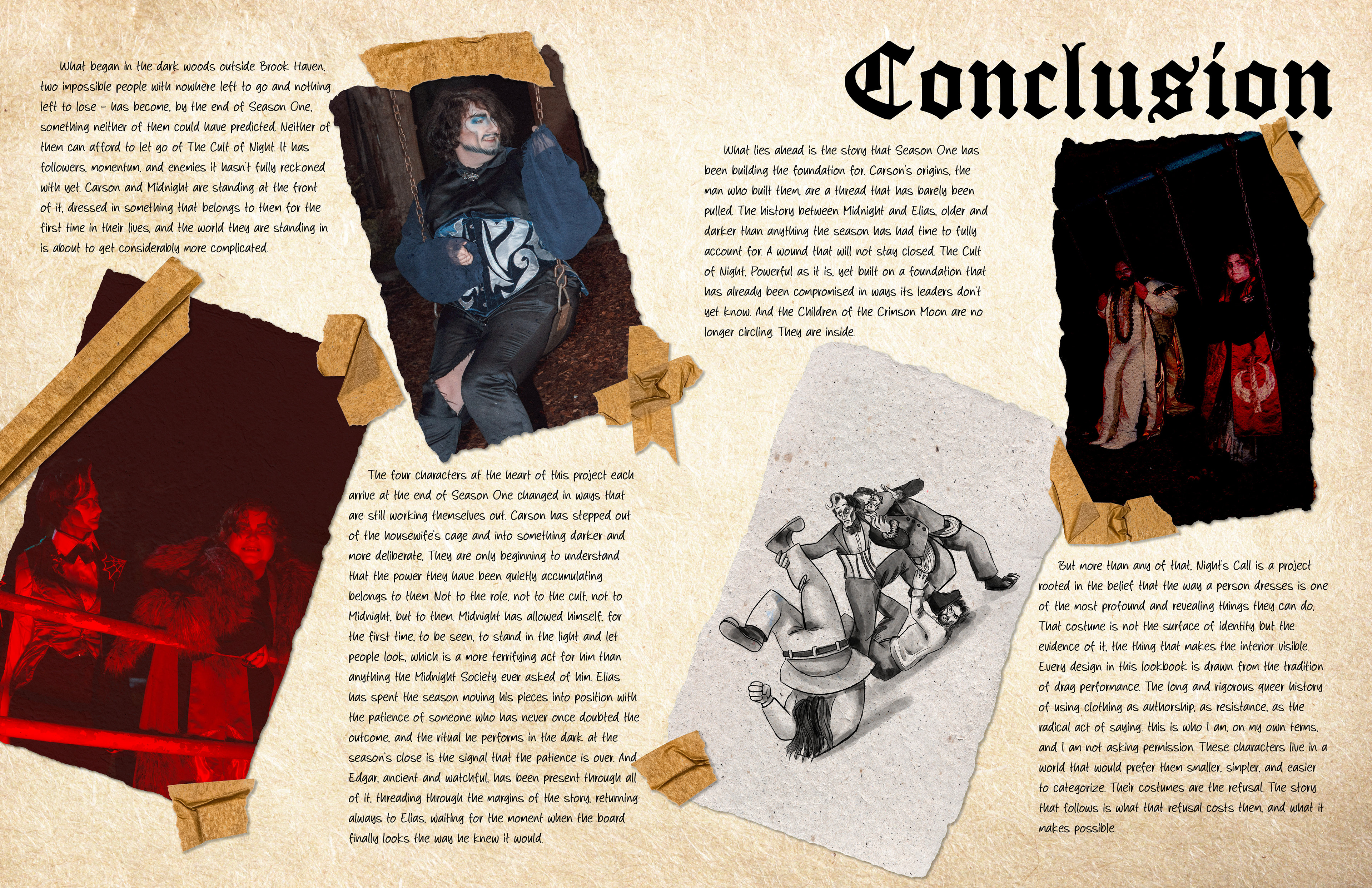
Night's Call begins with a question that queer people have been asking for centuries: what does it mean to be made into something, and what does it cost to unmake yourself? At its core, this project is a character-driven dark fantasy series built around a cast of extraordinary figures who exist at the margins, beings who were created, mutated, discarded, or misread by the world around them, and who must find language for themselves in the absence of anyone willing to provide it. The four central characters of Season One, Carson, Midnight, Elias, and Edgar, each embody a different dimension of that struggle, and each of them is, in some way, in costume. The series' visual language, and in particular its approach to costume design, is grounded in the long tradition that this accompanying research examines: the use of clothing, performance, and self-presentation as tools of identity-making, resistance, and survival in the face of a world that would prefer you to be something simpler.
The essay traces queer fashion from dandyism through ballroom culture, through the AIDS crisis, through the mainstream visibility of drag, and returns again and again to the same fundamental observation: that queer aesthetics have always been doing double work. A costume is never just a costume. It is a declaration, a negotiation, a shield, and sometimes a disguise. Carson enters the series dressed as the perfect 1950s housewife, raven hair, careful posture, every inch of her a reflection of what she was built to be, and the series' visual arc for her character is the slow, deliberate process of that costume becoming her own. The essay's argument that drag and queer fashion function as vehicles for "subversion, self-expression, and resistance" finds its direct parallel in Carson's journey: she does not simply change clothes across Season One. She changes who she is, and the clothes are how we see it happen.
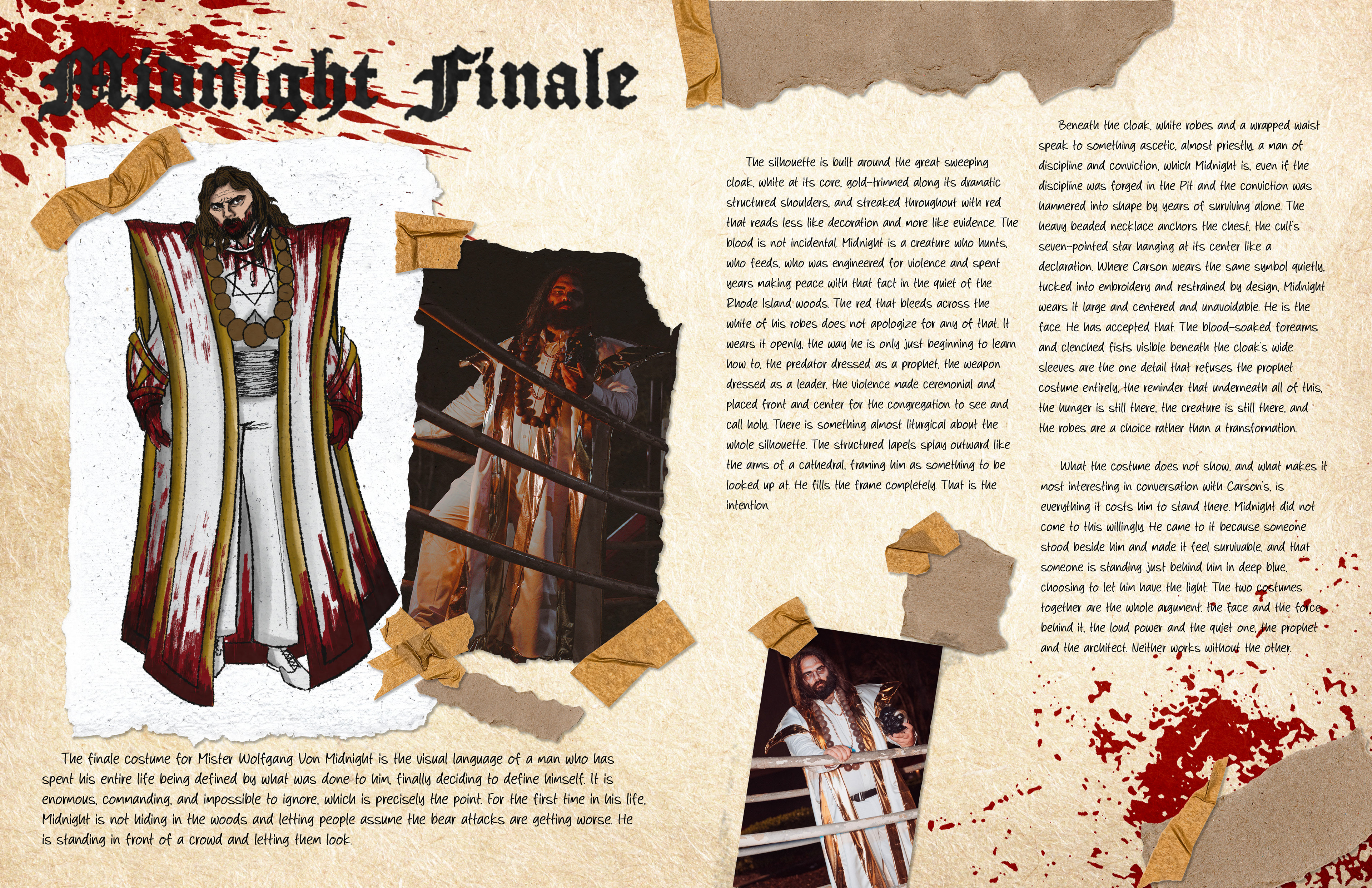
This project takes particular inspiration from the essay's critique of what happens when queer artistry is flattened, when the full diversity of drag, from kings to club kids to nonbinary performers who defy categorization, gets reduced to a single legible image for mainstream consumption. Night's Call is a deliberate attempt to hold space for the messier, more complicated version of queerness that the essay advocates for. Its characters do not resolve neatly. Carson is fluid in gender and still figuring out what that means. Midnight refuses every category available to him. Elias is a villain who loves genuinely and without apology. Edgar is ancient and tired and still searching for a place to belong. The costumes in this art book are not answers, they are arguments. Each design is a visual articulation of a character in the process of becoming, which is exactly what queer fashion has always been: not a fixed identity, but the ongoing, courageous, sometimes painful act of making yourself visible on your own terms.